Search This Blog

Sunday, 28 February 2016

Fed up or Made up?

Fed Up

Image result for fed up sugar meme


Recently I sat down and foraged through Netflix to land on the movie ‘Fed Up’, narrated by Katie Couric and and directed by Stephanie Soechtig. I know I am a bit behind here, as this was released in 2014, but the blurb looked interesting and captivating and indeed, it was both interesting and captivating, but not for the right reasons. The movie itself is looking into the obesity crisis in America and try’s to identify a single cause - because that is how the world works, there must only be one controlled factor in this epidemic. The movie starts off well, interviewing real people and real life situations but suddenly take an inaccurate turn with a clear agenda; sugar and the government are to blame. They film employs a myriad of “experts” to express their opinions, but it is clear at points that these ‘experts’ do not have a clue what they are talking about. They absolve blame of a person, one individual consuming more calories than they burn off. In fact, they laugh at the fact that the government says that calories make you obese, sugar is the root of all problems and in turn the government is corrupt for allowing this.

Obesity linked to sugar?

Over in the UK (as with America, in which the film is aimed) at the moment there is a massive campaign against sugar consumption – But is it to blame? It is claims that “this year (which would be 2014 at the time) for the first time ever, more people will die from the effects of obesity than from starvation”. This was the first of many sentences that made me think “huh, really?”. Well, after a quick pause and a quick google, it turns out not. The World Health Organisation put the death toll at 2.8 Million per year for complications directly linked to obesity. Oxfam puts the death toll at 8.8 million a year for starvation.

The movie falls into the pattern of ‘Correlation equals causation’. They state that dieting and exercise was once thought of something that would kill you. When the study was carried out by Jean Mayer in 1953 involving mice (They really stress the word mice there) he revealed that exercise must be correlated to weight loss. They then say:

"As more and more people began exercising, more and more waistlines grew out of control. Between 1980 and 2000, fitness club memberships more than doubled across the United States. During that same time, the obesity rate also doubled.”

So, no matter what we do we are always going to be fat, is the take home message. There is no strong evidence between sugar consumption (alone) and obesity – I’ve spent the last week looking for systematic reviews proving a correlation, but yielded nothing. This hypothesis has not been properly reviewed. One family in the film took it upon themselves to ‘detox’ from sugar, and with that, they lost weight. Well, they have proved themselves right, eh? No, the film didn’t exactly follow them as a study. We don’t know what else they were eating, how many calories they were consuming, exercise? and if I recall correctly, the younger kid put the weight back on.

Worse than Bias - Completely Scientifically Inaccurate

sugar evilThe movie promotes that fear of obese=diabetes, a correlation, and perhaps the only one, that is somewhat correct. The movie insists, multiple times, that the consumption of one can of coke will increase the risk of diabetes by up to 22%. Sugar does not cause diabetes. So where on earth is that figure from? Well, all I can say is that it is sad to find a website called ‘medical news today’ appears to propagate this myth. The articles claiming such links only source to their own posts. I am not going to trace down the study, because I know it is bullshit - in fact I am pretty sure it is discussed on one of these take downs movie reviews; Does the Movie Fed Up Make Sense? and Correcting the Fed Up Record. The film describes poorly the metabolism of sugar, their ‘expert’ Dr Robert Lustig says there is no difference between sugary drinks and fruit juice. He neglected to mention correlation between fruit juice and diabetes. I’ll take one guess as to why…sugar doesn’t cause diabetes. 

The campaign goes a little beyond sugar at times, using words 'toxins' 'Hazards' and even 'poison'. At one point they highlight some ingredients on the back of a packing in a way that would make Vani Hari scream with pure pleasure. The narrator talks about the 'hidden sugars' as this occurs and anything ending in 'ose' pops out in black bold letters and then it says 'All those words you cannot pronounce'...there's the crux I was looking for. If You cannot pronounce it you shouldn't be consuming it - The very reason I find The Food Babe abhorrent.  At one point Lustig describes sugar using science-y words that people can't pronounce - but it is okay, because he's making a point. 

"Sugar is poison. It is a chronic... not acute... chronic dose-dependent... depends on how much you eat, because there is a safe threshold, hepato... 'liver'... toxin. The metabolic diseases that are associated with obesity, the diabetes, the heart disease, the lipid problems, the strokes, the cancer... those diseases are being driven by sugar."

hey sugar stay away from me i don't want diabetes - hey sugar stay away from me i don't want diabetes  asexual andyThis highlights his lack of scientific knowledge and understanding of the human body, pharmacology and common sense. Everything is 'dose-dependent' including water. You need both sugar and water to survive. Therefore this could be also applied to water, we have a chronic addiction to water. That also has a 'safe threshold'. I'd like to point out AGAIN, the fact that they link diabetes diagnosis with sugar here.

Anti-science or Scientifically Illiterate?

I got a personal feeling from the film that they were very distrusting of actual scientists. They interview David Allison, professor of the University of Alabama, and ask for his opinion on how sugar has contributed to obesity. He calmly asks for a moment, so he can structure his sentence and make it clear, the film fades to black as he is pondering his answer – making him look idiotic and we never actually hear his response. He is quoted to respond to the film:

"I am told from others who have seen the film that a clip is shown in which I am asked a question about how one would ideally test whether sugar sweetened beverages contribute to obesity, and that I ask for a few moments to collect my thoughts; after showing me think for about 10 seconds, the camera cuts away before I give my answer," says Allison, who hasn't seen the film. "If this is the case, the film-makers’ behavior seems counter to thoughtful dialogue. To ask me a question and edit out the answer, and I did answer every question, shows a lack of interest in a discussion of the evidence."

Couldn’t have said it better myself, it is clear they are not ready for any opposition.

They focus a lot on studies which are “funded by the sugar industry”. I am not going to lie here, there are corrupt scientists out there. Ones that can be bought and will publish anything they can for money. Let’s take the best example of Andrew Wakefield, who was paid by the lawyers of a MMR case to publish a study saying there was a link between autism and the MMR vaccine. The movie focuses on a few cases in which the American Beverage Association (ABA) funded studies, which in turn had positive reviews in favour of the health benefits of sugary drinks consumption. They say the word ‘scientists’ like it is a plague on the earth. Let me be clear, when I read a scientific study, the first thing I read Is the ‘title’ and then the end of the article to see if funding has been acquired, who by and their links to that association. I recently turned down a PhD due to bias within the study I was sent as reading material. These people are a small minority, it is frivolous to imply that everybody can be bought and scientists will just publish whatever. I’ve said it plenty of times before, scientific studies are hard for scientists to read sometimes, they are hard to grasp the implications and they are hard on the mind-set, as they can (and are supposed to) change your way of thinking. If the average person on the street who has never studied science in their life can interpret it and publish their thoughts on the implications - then what is the point? I talk all the time about bias in studies, it is clear as day when it is there, this is nothing new and extravagant - it happens all the damn time in alternative medicines.

willywonka - So sugar is the reason for obesity? Tell me more how eating fruits and whole grains is bad fr you?

Conclusion

There are so many biased opinions and inaccuracies within this film that it becomes overly simplistic, unsourced and fabricated. The film fails to properly educate on aspects of sugar consumption and basic biology. Undoubtedly, the western civilization is consuming too much sugar and the film correctly highlights this. However, we know that burning off as many calories as you ingest is the key to weight loss - a fact which the film vehemently denies. Luckily in the UK we have a lot of public awareness around sugar (and unfortunately still misconception) but the film does a good job of raising general public awareness of hidden sugar. Nevertheless, it is largely unscientific, fear-mongering and just plainly wrong most of the time.

Saturday, 6 February 2016

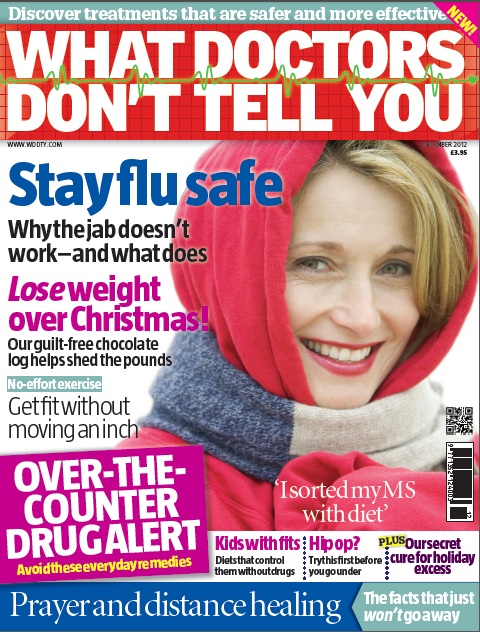
What Doctors Don’t Tell You – and Why


  Pseudoscience tells you what doctors will not

http://www.quackometer.net/blog/wp-content/uploads/wddtydec2012.jpg
I was pointed towards a magazine this week entitled ‘What Doctors Don’t Tell You’. This is a UK based organisation set up in 1989. Which I feel I will be writing about again and again. I know we have a lot of propagated pseudoscience here in the U.K (Luckily, not seemingly as much as the US), but I was quite shocked to find this organisation was creating a magazine that is sold all over in U.K stores. The company produce a self-titled magazine which publishes misinformation on healthcare news and alternative medicine. So, who writes this? None other than Lynne McTaggart. This may mean nothing to some of the readers of this blog but the ones who know the name will have just sighed and shaken their heads. She is largely known for her stance on anti-vaccinations and was torn apart by Ben Goldacre for her highly inaccurate portrayal of the Tamiflu vaccination. Her roster of claiming to fame is appearing on Deepak Chopras’ T.V. show. A laughable feat. She also writes this magazine with her husband Bryan Hubbard. Neither of these two have any scientific background. I should stop here, but I will go on with two posts made directly on their website.

Diabetes


I'll lay it out here, they claim that the cause of diabetes inflammation. I found a few studies that link the two. The science may the there but we are talking purely preliminary. This part of the post is to lay out the bias tactics used and the use of scientific jargon to confuse and misinform the readers.

Let’s take the cover off the bat, the latest magazine feature title is ‘uncovering the true cause of diabetes’. First off, they (kind of) 'bust' two myths about diabetes:

Myth number 1: Diabetes type 2 is caused by excessive food consumption and not exercising enough. They defend this by saying that if food gives you energy, and if diabetes is the result of eating too much, why are diabetics hungry and lacking in energy? That’s because they’re probably eating the wrong foods. Foods with high glycemic index/load (foods that effect a persons’ blood-glucose level) will bring the blood sugar up quickly. Contrary to popular belief there is still insulin secretion in type two diabetics that does work – especially on medication such as gliclazide – the blood sugar will then crash in the response to a spike in insulin. It happens to me quite often, I’m new to the whole world of diabetes and still finding my feet with what I can eat. I tend to feel this often when I try something new which turns out to be high in carbohydrates. They are not wrong in this at all, there can be a genetic predisposition for type two diabetes. Their reasoning, however, for why this is, being incorrect. Diabetes, when managed correctly doesn’t leave you hungry and fatigued, i know this personally and from other people. According to diabetes UK lifestyle choices are to blame for the increasing cases of type 2 diabetes diagnosis, so sedentary lifestyle does play a huge part, however.

Myth 2: The primary cause of type 2 diabetes is insulin resistance. This one is completely true too, the other is the development of the pancreas to just not produce enough insulin to cope with lowering the blood sugars to normal levels. I can only assume that these ‘myths’ (that are not really myths anymore as they have been talked about more-so over the years) are in there to put a little bit of science in there (no matter how much misnomer there is).

Is Inflammation the cause of Diabetes?

Then we get to the crux of the article, inflammation. Inflammation is a biological response to a range of stimuli – be it pathogenic, irritant or just damage. They describe the way in with inflammation is caused and the enzymes released, using as much scientific notation to sound as sciencey as is humanly possible. To get to the meat, they say that the most likely source of inflammation (speculation) is the food being consumed – this is what is causing diabetes and they know how to cure it. As I have been researching into diabetes for a year, almost every other day I read a few papers. I have only come across a handful regarding this, none of which are overly convincing to conclude that this is purely the cause. Then we get the most bizarre sentence. They state that they once had a patient who had whole-meal bread and that had a greater blood sugar spike than white bread.

Symptoms of Chronic Inflammation DiagramI find this fascinating for two reasons. We don’t have any patient details, type one or two? Treatment? Can they secret insulin, if so how much? Did they take their medicine - if so, how soon after did they take it? We have no idea and we are supposed to be shocked by this (not to mention, there isn’t an author credited. Who had this patient? They aren’t doctors. They have no medical authority. Why are they seeing patients? I can only hope that this article is written by someone else and they have left off the name. But I cannot find any medical authority linked to Hubbard or McTaggart). The second: There are more carbohydrates in whole-wheat than in white bread, there is probably going to be a bigger spike in overall blood sugar. Whole wheat contains more fibre, but it is still refined and processed. The more processed something is, the higher the chance of it having a high glycemic index/load. Their aim here is to say there is a difference in patients and not everyone has the same response - presumably caused by inflammation from food. Yes, that’s a very severe complication of medicine, its not always one uniform treatment as people respond to things in different ways. To say this as though it is shockingly new information is ridiculously misleading. Anyone who is diabetic should be aware of the differences in flours and fibres that will control blood sugar levels, and as they have been to a doctor for a diagnosis - what your doctor does tell you is more than sufficient enough. 

https://s-media-cache-ak0.pinimg.com/originals/3e/67/e6/3e67e6f58b4da526a87d1b4c705442a3.jpgThey then go on to say they have lectured people who have had blood sugar spikes from ‘diverse’ foods including rice, pumpkin and potato. All of these food have a high glycemic index and a high glycemic load – this is because they are wholly composed of simple carbohydrates which break down quickly to cause rises in blood sugar. What about portion size? I eat this food all the time, just limiting the portion size. This is evidence based science and is very simple stuff. They then move on to say ‘cut out chemicals and junk food’ – any specific chemicals? No, just chemikillz, because they’re bad for us, yeah? They have a list of suggestions on what vitamins and pancreatic support you can take (sodium bicarbonate, vitamin B, C, D and chromium). Of course, vitamins and chromium will help. Although this review published in Journal of Diabetes Metabolic Disorders begs to differ with regards to Vitamin B, anything to avoid Big Pharmas 'medicine', right? I see very little in the way of actual scientific studies in that these vitamins help and they provide no evidence themselves. Actually all of this article is said without any references to any studies, science or any informational sources other than a book they seem to agree with. I did however discover a study published in Nature entitled: p38 MAPK-mediated regulation of Xbp1s iscrucial for glucose homeostasis. They report that two proteins activated by inflammation are good for the regulation of normal blood sugar levels in obese and diabetic mice. Thus, increasing the levels of inflammatory signals could be therapeutic in diabetes. Directly converse to the article, but they don’t mention this research.I am not saying there are no positive clinical trials in studying diabetes with inflammation. There are - however few - but they are purely preliminary and the last credible piece of evidence was published in nature in 2011.

The broad definition of Inflammation is a little irking too. The causes of inflammation are vast, but they conclude it is down to food, it is unknown how they come to this conclusion. Lots of foods and vitamins are hyped as anti-inflammatory, but it is not entirely clear that they actually reduce any inflammation. Let's say that they work, that these 'anti-inflammatory' foods reduce inflammation, the wouldn't that cause more harm than good? Inflammation is a biological response to fix a problem, if that is reduced then we would have impairment in time to heal an infection or a wound. It would be reckless to say that inflammation is always a bad thing and try to prevent it without sound, scientific medical evidence to back it up.

Homeopathy Bashing is Wrong

The second article I take issue with is an article on homeopathy entitled: ‘The bad science of homeopathy – bashing’ The article talks about Dr Robert Hahn, who isn’t a ‘great lover’ of homeopathy but was ‘uneased’ by the skepticism of the Science and Education group in Sweden when they lobbied against homeopathy to call it unscientific. There is a lot of stuff with this guy and homeopathy, including an article he wrote saying that homeopathy is not a ‘fake medicine’ and ‘evidence shows it it precisely the opposite’ – that doesn’t sound like someone who doesn’t believe now does it? He is deeply religious and has published several books on how there must be more to the world because people have experienced it. Anecdotal evidence isn't evidence. It's people saying a bunch of words that are meaningless. Simple.

“This got Hahn to wondering: how could 18-year-olds have the training and experience to read and understand the complicated scientific studies necessary to form these opinions? They couldn't, of course, so somebody was feeding them a line-but who was it…?”

WELCOME TO Homeopathy Where the results are made up and the papers don't matter - WELCOME TO Homeopathy Where the results are made up and the papers don't matter  Whose Line
Firstly; ‘Complicated scientific studies’ is playing it very fast and very loose. Secondly, I can confirm that at the age of 13 I was sceptical of homeopathy. I remember a clearly defined conversation about it whilst in school with a teacher and a friend. The teacher believed in it, we didn’t. Who fed me the line? I had no formal scientific training and I wouldn’t have even known where to find a scientific paper. Is it so unfathomable that people come to their own conclusions based on evidence and what they know to be true? I mean, these people are doing the same thing in the absence of actual evidence, what they know must be true, because they know it is true. The truth is; age has nothing to do with critical thinking nor does education status. If education status was a factor, over half the people who support homeopathy would be lost in the crowd of the argument. Lest we forget, the degree path In homeopathy have pretty much been scrapped in the U.K. This 18-year-olds will have a basic knowledge of chemistry and biology having sat through high school and higher education, which would equip them with more than enough knowledge to use that critical thinking and know that the ‘scientific’ studies are pretty much pseudoscience. Apparently this guy is a researcher and professor at a university, how much faith can he instill into people by telling them they cannot comprehend a study and what they think must have been impregnated into them by academia. They go on to say that sceptics say:

“Homeopathy doesn't work because it can't work because it offends our view of how the world functions. With that premise established, any research that actually demonstrates that homeopathy works must be discarded because, by definition, it must be false. In science-speak, this is a type II error. In plain-speak, this means the negative premise-that homeopathy doesn't work-is false and should be rejected, yet all the evidence that rejects this false premise is ignored.”

A type 2 error is a failure to reject the null hypothesis – that is, that the false negative isn’t rejected. You have gone in to study, for example homeopathy, you study the effects of paracetamol in 30c dilutions. You as a scientists have the bias to say it doesn’t work. Your study says different, but you conclude it doesn’t work. Error type 2 is really not what is happening here. They are saying that it as scientists we choose for it not to work because it defines the realms of science. This is a complete false dichotomy. Homeopathy doesn’t work because it simply doesn’t have evidence to back up it’s claims. One study showing it works doesn’t discount the 1000 that shows it does not. It is simply discarded as an anomaly. I have discussed this kind of research in both the blog on Homeopathy and on Acupuncture. They actually clarify this in the next paragraph saying that a paper from 1997 by Linde (quite famous in homeopathic circles) showed that homeopathic medicine worked better than placebo in a suppressed correlative manner. But sceptics ignore this of course, it doesn’t fit with our pre-defined view of the world. A titanic amount of studies has been carried out between 199 bloody 7 and now. In fact, the authors of this paper carried out the study again in 1999 and concluded there was no net positive effect. Quite biased to mention only the one study, but I am not at all shocked by this misleading information, nor should you be. It is genuinely unfathomable how they can only come up with one study from nearly 20 years ago. They end this ridiculous post with:

“These sceptics hide their prejudices behind a veil of science, and misuse the objective practices of proper science to 'prove' their own prejudices…they've fallen for a whole heap of bad science.”

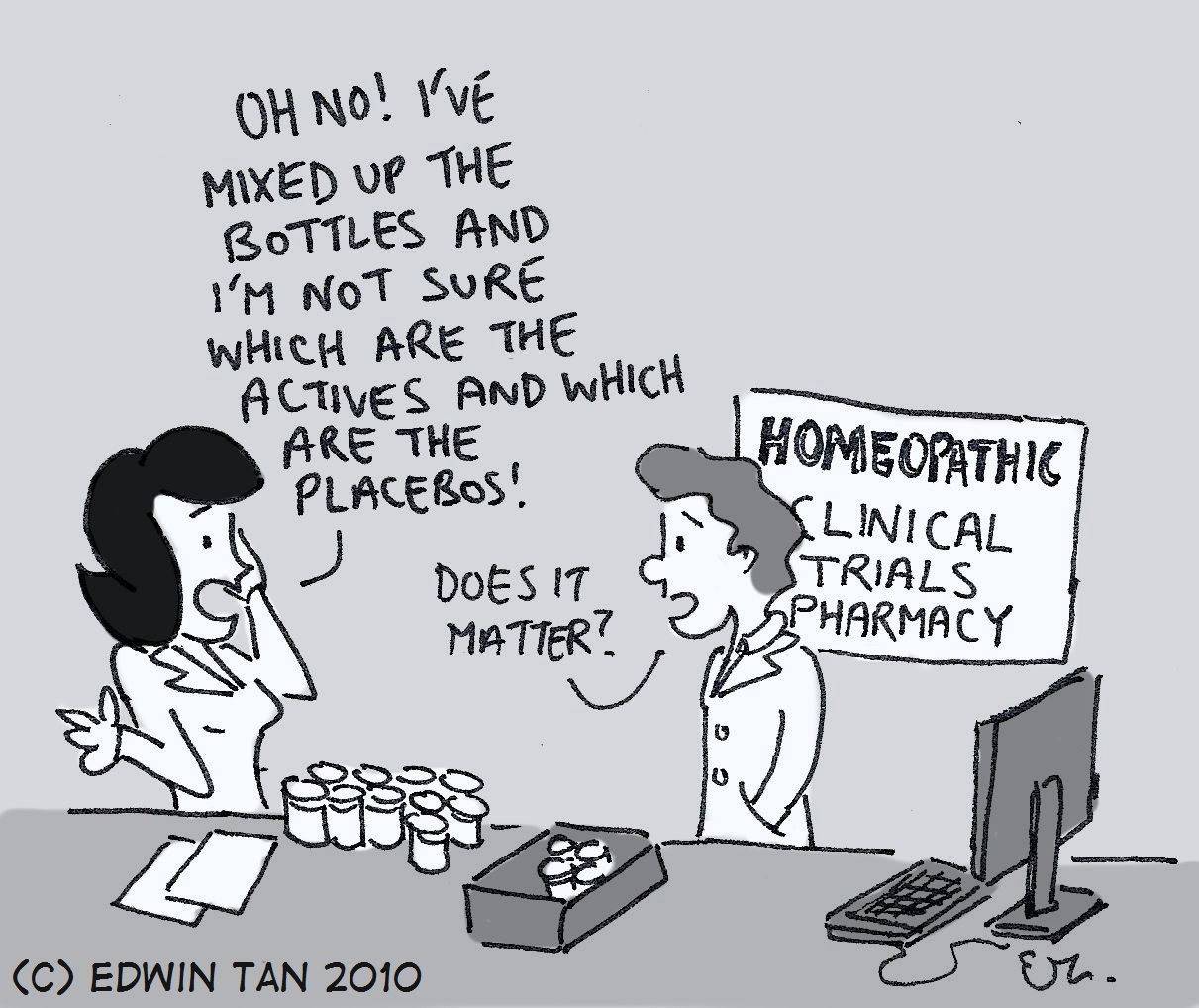
Homeopathy cartoonScience is a systematic way of observation. With that we use logic and rational thought to analyse data and evaluate results to come to an evidence based conclusion. I have no idea what prejudices they think these people had, I am assuming a scientific education? I don't presume to have any prejudices myself. I change my thinking based on the science. I have often believed something to be true only to read up on the evidence of it and change my mind, and vice versa. That is what science is. If knowledge is the prejudice, then you guys really are clutching at any straws for credibility. How about you provide credible evidence for homeopathy working? Maybe then the NHS will stop considering the blacklist for homeopathy. And whilst we are at this point, this sentence fits perfectly in with the diabetes inflammation studies above. They don’t give any references to any science they have used, any papers, anything. Does that not ‘prove’ their own hypocritical prejudices by making what 'facts' you can find to fit your theory.

Conclusion

There is a reason your doctors don’t tell you this. It is pure pseudoscientific bullshit or so preliminary there is no reason to mention it. With diabetes you should be watching your diet and testing what foods are causing what kind of spikes, there are a multitude of books on glycemic loads - follow them. WDDTY is highly unreliable, fear-mongering and heavily biased pseudoscience. 

Sunday, 31 January 2016

Is Accupuncture Punctured?


Is Acupuncture less effective if you don't believe?

Acupuncture is a pre-medical scientific treatment which is derived from ancient Chinese medicine. The ‘art’ of acupuncture is the insertion of fine needles into ‘acupuncture’ points on the body for therapeutic uses. The theory (the most credible of many) goes along the lines of using the points to produce endorphins using the underlying nerves in the skin. This is used to treat a myriad of symptoms from back pain to anxiety and asthma to diabetes and cancer.
It is argued that it is suitable for use and does work for treatment in patients, including on the NHS website, which claims its use for back pain is suitable because there is ‘evidence’ as recommended by NICE – which is extremely controversial and highly disputed as many Cochrane reviews find there there is no evidence. The way many of these studies are carried out are a subject of great disparity. Most of the evidence is contradictory saying that the results are no better than placebo or saying that it is better than actual medical interventions. Clinical research uses a null hypothesis, either medical intervention works or it does not work. The trail puts burden on proof on the evidence it finds or does not find. When you read this, bare that in mind. I will talk about studies having positive effects and negative effects. If one study has a positive effect and 9 have negative effects, it doesn’t mean that it there is zero effect. It means that the likelihood is smaller of the thing in question having an overall positive effect.

Simple Studies with Simple Bias

It works because they don’t know how it works. With that track record, how can it be said to not work? How Indeed, well, lets take a look at that thing called ‘evidence’. Last year, there was a study published in Ednocrinology titled: Effects of Acupuncture, RU-486 on the Hypothalamic-Pituitary-Adrenal Axis in Chronically Stressed Adult Male Rats. I choose this study as it is referred to a lot across the internet and in the media as ‘the golden goose’ as to how acupuncture works, but is it really? You can access the PDF of the entire paper here and read it for yourself.

This occurs all to frequently with the realm of acupuncture, a study looks at something being prodded with a needle and to assess psychological outcomes is sprayed across the internet as proof as to the functionality of how it works. The study itself looks at two experiments involving rats in different groups; testing control, stress, false acupuncture and acupuncture. If you look at the study, one of the major things you will notice is that none of the rats are actually receiving acupuncture. They were receiving a shock through a needle, known as electroacupuncture – which is as ridiculous as it sounds. The authors assert that their data shows that electroacupuncture lessens the effects of stress caused by cortisol influx in the body. There are a total of 42 subjects, 7 in the control and stress sample groups and 14 in the remaining 2 of the 4 groups. This was a completely unblinded study; the researchers knew which rat was receiving which treatment. With note a lot of data points and an unblinded study – does this even show anything at all?

Let’s look at the results themselves; there are minuscule differences between the actual groups. We cannot conclude that there is a difference between false electroacupuncture and actual acupuncture. This is because the researchers mask the results behind statistical trickery. They say that there is a statistically significance between the control and the electroacupuncture and the difference between the control and the false electroacupuncture was not significant. The difference between electroacupuncture and false electroacupuncture isn’t mentioned, an all to common theme you will see. This study offers nothing really to the world of the pseudoscience of acupuncture, the statistics are incorrectly represented, it doesn’t show ‘how acupuncture’ works – it can be argued that because it uses electrical currents, it isn’t even acupuncture. How much belief do you have in the procedures that you have to clutch at non-existent straws to give it credibility?

http://images.laughaton.com/11797/origin-of-acupuncture

Reviews

So, that is just one of the studies, if not the most popular one. Which shows nothing, so let’s look at the bigger picture. In April 2011 Edzard Ernst published a mass review entitled: Acupuncture: Does it alleviate pain and are there serious risks? A review of reviews. The authors reviewed all systematic reviews published in the prior 10 years, exhausting the list of 57 systematic studies. Cochrane release many reviews on the subject, from specific aliments such as headaches and infertility to more widespread views. It appears very little evidence is brought up.

Meta analyses of positive trials have found small differences between the real and fake acupuncture, as seen with the Effects of Acupuncture, RU-486 on the Hypothalamic-Pituitary-Adrenal Axis in Chronically Stressed Adult Male Rats study dissected earlier. A review published in Biomedical Journal in 2013 looked at 13 trials which involved a total of 3025 patients. All of the patients were treated with acupuncture to aid a variety of ailments. There were small differences noted between the fake and real acupuncture, but greater differences were noted between the acupuncture and no-acupuncture group. These groups of course were not blinded. This again, can be demonstrated in a study published in Arch Intern Med who looked at 29 trials with a total of 17922 patients. The results showed acupuncture was better than sham acupuncture with very little difference between the two, so much that it lacked any statistical significance.

What’s the harm?

If you are thinking it is its just needles and placebo is a good thing then there is ‘not a problem’ as it can’t cause any harm, keep reading. Because even the slightest bit of pseudoscience can have damaging effect.

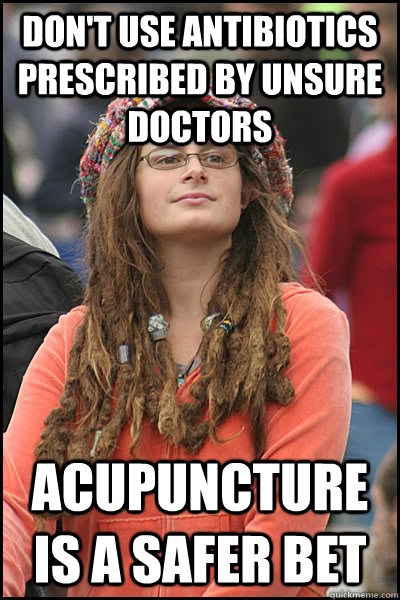
Don't use antibiotics prescribed by unsure doctors Acupuncture is a safer bet  College Liberal
Chinese acupuncturists recently released a review of all the adverse events involving acupuncture within Chinese literature. They found a total of 1038 cases, in which 35 people had lost their lives. The adverse effects ranged from haemorrhages to pneumothorax. Let’s recall where acupuncture comes from, China. This is coming from literature that is completely biased, meaning to favour acupuncture. I can only assume that many cases are largely unreported, probably seen as a ‘small side-effect’. In 2013 another review was published on the vascular problems caused by acupuncture. A total of 31 cases were reported with three deaths and reports of thrombosis, aneurysms, compartment syndrome, internal bleeding and ischemia. In April 2011 a review showed that 95 cases were published involving serious medical adverse effects, of which included 5 deaths.

It would be quite biased of me to say that this shouldn’t happen because medical procedures carry no risks. Even the simplest of procedures carry dire risks and these events are seldom. But with medical procedures, we have a valid and backed up statistical program. We have no idea how many people are actually being injured from these procedures, there isn’t exactly a huge follow up to assess the risks and benefits.

Conclusion

Acupuncture pressure points are complete fiction. They have no scientific basis, nothing supports their existence. At all, they are completely made up. As I have moved to a new town I have noticed that there are more and more of these kinds of stores around me, which is very depressing. There are a total of three acupuncture centres, one of which claiming to be a sports therapist the other two acupuncturists. The damage and fatalities caused by acupuncture are admittedly rare, but it is unknown how rare and how many problems have been caused. When I was reviewing the evidence linked to acupuncture I got into a few arguments, the best of which was: “Maybe a little search of Google Scholar is required” which pretty much sums up the world of acupuncture; google the response you want. Publication bias is a massive problem in alternative medicine which can be easily demonstrated with acupuncture. It is exceptional the amount of studies I read where I have googled the author and they just so happen to practice acupuncture themselves. I have no doubt this will not go away and die-off like some other pseudoscience that lose traction. I think this will be around for many many more years to come and continue to produce little to no evidence of it’s clinical significance. To put it in the words of Steven Novella: this will be tolerated as a voluntary self-imposed tax on the gullible, for as long as governing bodies choose to not step in to assess it.

Friday, 15 January 2016

Why Should Psychedelics be Legalised?


Legalising Hallucinogenics to Treat Mental Illness


This week I came across a blog post on ‘Vox’ entitled: ‘The most convincing argument for legalizing LSD, Shrooms and other psychedelics’. As drugs are an interest of mine, I tend to follow their news trends quite closely in the UK. Now, don’t mistake that to mean I take drugs: I sincerely do not condone drug use, I merely work with them. In fact, that’s my entire job: to analyse drugs. I see it almost every day, death, violence and destruction from the use of drugs. I don’t mean that to sound overtly poetic, it’s simply the truth. Imagine my surprise to see an article in support for the legalisation of lysergic acid diethylamide (LSD), Psilocin (magic mushrooms) and Ibogaine - complete with evidence. Let’s look at the article, the papers and the evidence we have to support the use for these substances for treatment purposes.

The Article and the Sources

The article is written by German Lopez. He seems to write a lot on drugs from what I can gather, I don’t know what his stance on the issues, but I can take an educated guess from this article. The article talks more about the enrichment of life through psychedelic drug use as opposed to them being used as a cure for anything. Nevertheless, he does mention the use of drugs for cure of mental illnesses such as anxiety, its hard to see what the focus of the reason for legalisation is, he states this:

‘This is the case for legalizing hallucinogens. Although the drugs have gotten some media attention in recent years for helping cancer patients deal with their fear of death and helping people quit smoking, there's also a similar potential boon for the nonmedical, even recreational psychedelic user. As hallucinogens get a renewed look by researchers, they're finding that the substances may improve almost anyone's mood and quality of life — as long as they're taken in the right setting, typically a controlled environment.’

The words ‘Typically in a controlled environment’ is what is getting me here. How do you control for that? What would be deemed the ‘right’ setting for hallucinogenic drugs? There are arguments for legalising drugs to take down the illegal market, I don't think that's what this post is is aiming at. But here is my take on that segment: Let’s take LSD for example and hypothetically say that these drugs work as cures for mental illnesses. Legalizing something such as LSD doesn’t mean that the illegal market will dissipate, far from it: there will be competition. Especially in America and places where people pay for medical care, the black market will look a whole lot better and ultimately cheaper - does that not make it more dangerous? Anyway, getting back to it. 

Looking at this guys 'backing up' with evidence is a little strange. He states:

“….why preliminary, small studies and research from the 1950s and '60s found hallucinogens can treat — and maybe cure — addiction, anxiety, and obsessive-compulsive disorder”

I looked at these studies, well, I say studies. Links to articles that back up the point he is trying to make, which in turn link to the studies. I can find a million and one articles for the use of psychedelics to treat anxiety and I can find the same for against the use. Choosing favour over one is called Confirmation Bias. I am more focused on what the science says, rather than a jaded reporters take on the interpretation of a study.

Pilot study of the 5-HT2AR agonist Psilocybin in the treatment of tobacco addiction is a study published in the Journal of Psychopharmacology and linked in the article, published in 2014 and concluded:

Although the open-label design does not allow for definitive conclusions regarding the efficacy of psilocybin, these findings suggest psilocybin may be a potentially efficacious adjunct to current smoking cessation treatment models

The research doesn’t appear to be have been picked up after that. The study used only 15 subjects dosed with varying levels of psilocybin and looked at the efficacy of the drug to wean smokers off of cigarettes, with a 80% success rate. Those of you that have followed this blog and know me, know that sample size is the crux of any study. I think you know what I am going to say on the ethics, the results and the tediousness in which this applies in the grand scheme of things. I’ll save you from it and allow you to infer it for yourselves - thinking is fun isn't it? I will say this though; I came across a study describing the synergism of tobacco and psilocybin. Tobacco exposure decreases the amount of an enzyme called monoamine oxidase inhibitors (MAO) within the body. Psilocybin has been known to have prolonged effects with the presence of MAO after binding to hydroxytriptamine receptors (HT), which in turn, can be effected by MAO. It is little reckless to study this as a therapeutic avenue, considering the active ingredient can potentially synergise, is it not?

shrooms
The second study linked to is from a research centre called the Heffter Research Institute, but published in JAMA Psychiatry. The institute itself is set up in order to see if psilocybin is effective in treatments. That’s the whole research foundation. As far as I can tell, the research is mostly in therapeutic treatments to ease symptoms in advanced stages of cancer. This is far from the word ‘cure’ which is used twice the in article. The study appears to focus more on the ‘psychospiritual experiences’. It is quite evident that there is a little science in the study, none of which can be measured, with exception of physiological effects (heart rate and blood pressure). The measured effects to make the study 'significant' are the account of people feeling better after taking hallucinogens – which they say correlates with the therapeutic outcome, within the 12 subjects used, within a those, there was a placebo group - the study does not state any numbers for the subjects in each group. The basic consensus is: their mood changed after taking drugs - which is probably good considering they had terminal cancer. 

The third study linked me to a page that was unable to be found. The fourth linked me to an article he wrote previously expanding on the first study published in Journal of Psychopharmacology. I decided not to read that particular article. The rest of the article focuses on studies linked to cancer and easing the patients into a ‘better quality of life’. After all, that is the whole point of the article, to inform you on the ‘cure’ for (the word he uses twice) depression and improve the quality of life. There is a lot to be said on the easing of the pain of terminal cancer patients, but are hallucinogens the answer? The links provided to studies to centre around one place: the Heffter Research Institute. Most of the studies published by them are not empirical and are more anecdotal with very the few patients used in the studies - again, infer from that what you will.
 

Controlling 

After laying out the evidence, he circles back round again to that word: control. How can this be carried out in a controlled setting? He asks. And then he (or he is possibly quoting someone, it is unclear) lays out the plan (N.B. the numbers are added by myself for clarity below):

“Here's how it would work: A psychedelic user would go through some sort of preparation period to make sure she knows what she's getting into [1]. Then she could make an appointment at a place offering these services. She would show up at this appointment, take the drug of her choice (or whatever the facility provides), and wait to allow it to kick in [2]. As the trip occurs, a supervisor would watch over the user — not being too pushy, but making sure he's available to guide her through any rough spots. In some studies, doctors have also prepared certain activities — a soundtrack or food, for example — that may help set the right mood and setting for someone on psychedelics [3]. Different places will likely experiment with different approaches, including how many people can participate at once and how a room should look.[4]”

1)    We call this consent; in a clinical trial a person is wholly informed on the ins and outs of the study. What they are taking, the effects, the upsides, the downsides, what they must do, what they mustn’t do. Everything. This would include any previous medical trials carried out. Including information of efficacy and deaths. The same applies to any drugs you take from a pharmacy, that’s what the pamphlet is that nobody really cares to read. What faced with the consequences in a 'controlled' setting, how likely are you to consume the substance?
2)    Any drug of your choice. This, right now is starting to sound less like a legalization scheme and more like a drug enhancement scheme.Which one of these psychedelics exactly is he saying has the evidence to help? Psilocybin is heavily featured in the article - but i cannot find any actual trials featuring this drug with enough evidence for legalisation. This Review (PDF) pretty much sums up Psilocybin, its effects and evidence for therapeutic use.
3)    Say this was legalised in the U.K – Do we have the funding? No. Doctors and medically trained professionals do not want to spend their days watching someone off their face on drugs, they see that enough. In the U.S.A – how much will this cost? Who is going to be able to afford this?
4)    I hardly think this is the time to start suggesting studies on the efficacy of different rooms, I think we need actual hard evidence with peer reviewed research prior to this. 

My final point on this is a point I made earlier in this post. Drug users would be all over this legalization, but drug dealers will be on it faster – they literally own the market for this (sad, but true). Drug users don’t want controlled environments. LSD and other hallucinogens are essentially partydrugs – you take them at friends houses with friends to have a ‘good time’. Not sat in a room on your own whilst a doctor is staring at you, but each to their own.

Is this worth legalising?

everybody wants acid
To this guys credit, he clearly lays out the facts on the two big risks of hallucinogens: the fallout and the ‘bad trips’. Drugs have consequences, despite the debate over them, they are on banned lists for a reason. They are dissociative drugs, essentially meaning that they alter perceptions by acting on receptors responding to serotonin. The experiences themselves can vary and are often unpredictable. The long term effects of hallucinogens are very well documented, paranoia, mood swings, confusion, hallucination and constant visual disturbances. Mood swings and paranoia huh? This article is a defiance within itself. It is proactively talking about legalising something that it claims ‘cures’ depression with something that has a very real side effects that cause depression, the very definition of counterproductive. How is a trained professional to deal with a ‘bad trip’? Just because they are in the confinements of a ‘controlled’ environment, doesn’t mean the bad trip will be eased. A bad trip is referred to when the drugs cause anxiety or panic attacks, which again, counterproductive. Lets think about costs: Drug use is said to cost (PDF) a good £15,400,000,000. That is a lot of money on people blindly taking drugs. Lets consider that it is legalised, it could be argued that as it is more controlled, the costs will be less, yes? But will more people not be inclined to take drugs? They are legal after all, and if they are legal, they should be fine to use? More users, more issues, more money, logically speaking.

LSD users develop and high degree of tolerance to the effects of the drugs. This means repeated uses require larger doses to get repeated effects. In turn, frequent uses if legalized will quickly diminish in the benefits that are being propagated. For example, say I am depressed or anxious and I attend one of these ‘controlled’ settings for a hit. I get a dose. I have a trip, I feel better. I attend again a week later. A month later I am chasing a high. I am paying to feel no effects.

Conclusion

The market for psychedelics is renownedly small in the grand scale of drug use, they have arguably less effects on people than narcotics. But should they be legalised? In my opinion, the benefits do not outweigh the harm. Infact, I have researched into this and I am still yet to find any benefits that have been well documented. Seemingly, the author of the post on VOX has information I don't and concludes with saying:

‘But if we know the benefits to public health and well-being are real, it's irresponsible to let the potential go untapped’.

As stated, am really struggling to see what the benefits to hallucinogens like LSD are. In his post there is nothing substantiating the claim. In the literature there are only small scale pilot studies that never get picked back up. There’s a reason; the studies don’t conclude much, don’t have high statistical significance and lack solid foundations for future research. Using hallucinogenic to treat depression and anxiety is highly counterproductive, considering their side effects, including the risk of harm and death. Psychedelics do tend to have a good record of safety in terms of clinical research, I am not questioning that, I am questioning the efficacy of such studies - for now, I am not convinced. For an article entitled: ‘The most convincing argument for legalizing LSD, Shrooms and other psychedelics’ there really isn’t much in the way of convincing.

Note: This is by far not the only post out there, there are many more, with many other suggestions on how to legalise drugs and why (mostly built on a unsubstantiated medical foundation)