Search This Blog

Monday, 6 August 2018

What We Cannot Blame on Climate Change


Climate change is huge problem, it has significantly impacted the modern world, despite what people may think. Temperatures are rising at an irresponsible rate. This year we have seen wildfires blaze their way across the world, which has been attributed to rising temperatures and dry conditions caused by global warming. Global warming has been linked to rising sea levels, melted ice caps, absurd weather variations and overall changes in the climate. Last week however, it was also linked to an increase in suicide risk. Is this really as clear cut as rising temperature lead to a rise in people taking their own lives?

The article

Well, according to a study, yes. The Guardian ran an article reporting on a study which demonstrated that an increase in heat linked to a spike in suicides within the US and Mexico. They concluded that the 0.7% increase in suicide in the US and 2.1% in Mexico was connected to the average monthly rise of 1 degree Celsius heat.

“Determining whether or not the rate of suicide responds to climatic conditions is important, as suicide alone causes more deaths globally than all forms of violence combined and is among the top 10–15 causes of death globally,”

Luckily, the guardian published the clenching sentence: 

"This kind of study cannot prove a causal link between rising temperature and more suicides."

However, their headline was still ‘Rising temperatures linked to increased suicide rates’, so it’s a bit of a swing and a miss from this journalist. I understand the reasoning in this to grasp peoples attention, but it is also negligent knowing how misleading it is. Other media have been a little less pro-active in warning that correlation doesn’t equate to causation with the Dail FMail claiming that the raising temperatures will cause THOUSANDS OF SUICIDES.

The Study

Now, look at this paper closely. The paper was published in journal Nature Climate Change. The study found a link between temperature and suicide rate, taking into account the a few factors that could affect the suicide rate (i.e. wealth). They used data from the US National Vital Statistic System and Mexico's Instituto Nacional de Estadística y Geografía to obtain monthly suicide rates. They also considered the seasonal variations, ages distribution, wealth and even took into account the news of celebrity suicides around the period. In conjunction with this, researchers tried to look at how the heat may be affecting people by assessing the use of ‘depressive language’ during the higher temperatures. To do this, they assessed over 600million public tweets from 2014 to 2015 from the locations used in this study, using words based on similar research looking at links between tweets and suicides. The research found that as the temperature increased, as did the suicide rate. As the temperature rose by 1 degree Celsius in the US, the suicide rate increased by 0.7% and by 2.1% in Mexico per month. They also found an increase in the tweets that used ‘depressive language’. The researchers have dumbfoundly stated, that their research provides evidence for a link between increased temperatures and increased suicide rates.
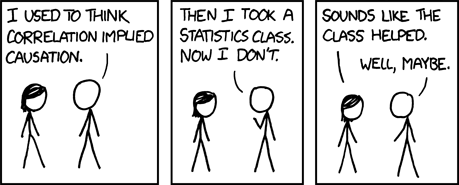
Correlation

The approach taken by these researchers was an ecological study, that is, studying a population in a geographical location. Looking at small areas allowed for the researchers to collect and analyse data over longer periods of time. As the researchers looked at averages of the exposures of heat and outcomes throughout the time, rather than the individuals, the data is somewhat meaningless. Many of the US utilises air conditioning, which is used to cool down or heat up a room. It is unknown how many of the individual people had been exposed to the raising temperature, there is no way the researchers could know. Suicide and mental health is one of the most complicated struggles of our time. With more mental health awareness being pushed, more research is being conducted and suicide being associated with more mental health issues. My point there being; it’s too complex to say one thing has caused suicide. This study did not go into the experience of the individuals that had taken their own lives. They didn’t look at the individual factors that lead up to that moment.  When in research we make a discovery, we have to think as to why that has happened. What was the psychological/biological/sociological link as to why the temperature increased the suicide rate? The only attempt to explain this by the researchers was from the twitter data looking at how people’s tweets changed in response to the heat. Those of you familiar with twitter will know that you can tweet anywhere, anytime. Even when on a holiday or visiting family. The data show the researchers that a tweet was in that particular location, but it will not reveal that they are passing through.

Conclusion

If you have made it this far in life without hearing the fallacy ‘correlation doesn’t equal causation’ you have lived under a rock. As a researcher, I find this sentence wholly annoying, simply, because it is true. Research is hard and rarely as cut and dry at this. There are many factors involved in even the simplest of human participation studies that render the most simple findings even shaky at best. There is no proof that suicides have been caused by an increase in temperature by the means of this study. The main design flaw in this study is that the study wasn’t conducted on an individual basis, meaning that it is unknown what drove these people to take their own lives. We have no information about the experience of the individuals. As I have stated, suicide is a very complex thing and is hugely oversimplified here. Climate change is used as a determining factor in a lot of the phenomenons going on around the world at the moment and most of them true, this however, is not one of them.

correlation implies causation
Source

If you do suffer from any form of mental health issue and require help, please seek it. The UK samaritans number is 116123 and further help can be found at https://www.samaritans.org/ and within the NHS. In the US the national Suicide Prevention Hotline can be reached on 1-800-273-8255.

Monday, 23 July 2018

Homeopathy Fights Back

Last year I wrote about how the National Health Service (NHS) in England stopped the funding of homeopathic treatments, a correct decision, saving not only much needed money in this current climate, but lives. This decision came after multiple reviews of the lack of evidence that homeopathy actually did anything other than cure dehydration. Okay, maybe they did not write that in their report, but it is pretty much the gist. However, as strained as the NHS is, they still got slapped with a lawsuit for this decision. The British Homeopathic Association (BHA) decided that homeopathy deserved more of a chance than the scientific rigor with which we hold all medical standards to, and with that, they decided that suing the NHS was their best option. The BHA was set up a good hundred or so years ago and has not really shifted with the times since. Their website does have an ‘evidence’ section, but I have decided not to click on this as I’m 100% sure it will be the same as the other ‘scientific’ papers myself and others have discredited and I cannot deal with the stupidity even further than what had already been carried out by them.

The Lawsuit

So, what happened? Nothing really, the BHA argued that there is ‘clear evidence’ that homeopathy works in these specific cherry-picked cases (or something less biasedly worded) to which the judge responded that it wasn’t his job to review the evidence. Which was a good decision on the judges’ part, he is not a scientist, nor any scientific authority. The NHS however, is a medical authority, with the power to review and make evidence-based decisions. Fortunately, the judge ruled in favour of the NHS, stating that the processes they followed to stop funding homeopathy was ‘fair and balanced’ and stated that there was no evidence of bias in their decisions. 

File:Royal London Homeopathic Hospital sign.jpgSadly, the fact that it even got this far is an impingement on science. Anyone can claim that they have been biased against when things don't go their way. This has cost a strained NHS because someone was upset that their pseudoscience has been proved to be just that; pesudoscientific nonsense. Following logic and evidence (albeit, better late than never) doesn’t make you biased against something, it makes you a better thinker. Anyone with an inch of critical thinking would arrive at this conclusion. Does that make them biased? 

If your answer is ‘yes’, why? The main lobbying of this from the BHA was that the NHS was ‘closed-minded’. Homeopathy is quite clear cut, it doesn’t work, it hasn’t been proved to work and the lack of evidence has forced the NHS to firstly review it and then secondly, stop plying money into it. Not only did they appeal this decision, but they attacked the basic unity of quality control and testing within medicine. Attacking  and trying to dismantle the entire foundations that the standards of care we have in the UK today. We have it pretty good here, we don’t have an ‘anything goes’ system. The NHS works off of science and evidence, to get both of these you need the scientific rigour with which our healthcare standards are built upon, eroding those foundations will lead to a collapse in healthcare in general. All this to sell literally fake medicines and make money off of a dying breed of pseudoscience? There’s no low to which people like this will not stoop too. £92,000 per year was funded to the homeopathy referrals through the NHS (you can see why BHA are clearly hurt about this money-making pseudoscience declining) for treatments that are not proven to have any effect. In fact, it probably cost more than that when they came back to their NHS doctors because whatever issue they had, unless it was dehydration, persisted. Their website however, still has the link to how to be referred. This does have a disclaimer on it, basically saying that funding has been cut, and that you can harass the NHS with calls for a formal complaint to them.

“It appears NHS England can fail to engage with patients properly on removing services and get away with it…That is not good enough, for it is important to remember that the real losers in this case are the patients who are now being refused a treatment on which they have come to depend.”

I’m sure they will thank the NHS when they look back in a few years and discover that it was the chemotherapy off of the NHS that let them live, not expensive water. They get to live, they are not the losers. The real losers are the people scamming patients and making money from selling pseudoscience. This is a great victory for the UK in science, medicine and critical thinking. This victory will cut off a lot of funding for the homeopathic community. Hopefully cutting them off at the knees like this will only enable them to crawl on a little bit. Now, if we could roll this thinking out to the rest of the world and kill this off once and for all, that would be great. Sadly, I don’t see that happening anytime soon. 

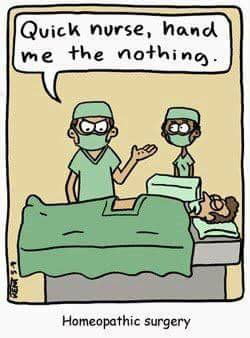
At least he didn't get vaccinated

Thursday, 10 May 2018

Can over the counter drugs prevent Alzheimers?


Could one of the most consumed painkillers on the market stop Alzheimer’s? If only, that would be great. However, it’s a little more complex. Last week The Sun and (of course) the Daily Mail, along with other major news outlets published an article stating that ibuprofen has the potential to ‘wipe out’ Alzheimer’s. The news orients itself firmly to state that this study is a significant scientific breakthrough. They know how to stop Alzheimer’s, that is amazing. You can source the paper they are referring to. This is open access, you can read the study yourself. When we get studies like this, we expect double-blinded randomly controlled clinical studies that can give us (hopefully) unbiased results, which can then be replicated to establish connections. As this is a big disease with which the mechanism and pathology are very little understood, I would expect big things from this study, and hope it was more of a review of double-blinded clinical studies rather than one.

https://upload.wikimedia.org/wikipedia/commons/thumb/b/b0/200mg_ibuprofen_tablets.jpg/800px-200mg_ibuprofen_tablets.jpg

The…work

I won’t use the word ‘study’. It is kind of insulting to the word given the terminology used. The work was misnomer-ly titled: Alzheimer’s Disease Can Be Spare by Non-steroidal Anti-Inflammatory Drugs. What media outlet wouldn’t go crazy over an article with that title? Not too shockingly the work carried out was not a double-blinded randomly controlled study, but instead the study looked at the amount of amyloid-beta protein in the saliva. This is a protein that some researchers believe to be higher than average in the initial stages of dementia. I would like to point out, there is no proven connection here between the protein concentration and the onset of Alzheimer’s disease, this is just a hypothesis. It could be right, but it could also be wrong. The test was carried out on 23 people who had Alzheimer’s disease and 31 people acted as a control. I will repeat the title here:

Alzheimer’s Disease Can Be Spared
by Nonsteroidal Anti-Inflammatory Drugs

…They appear to have missed off: ‘by using uneven controls and making a titanic jump to the conclusion with remarkably small sample numbers’. But hey, that’s the nature of science, sadly. The paper itself doesn’t even mention ibuprofen, it states ‘non-steroidal anti-inflammatory drugs’ (NSAID) not specifically ibuprofen as the articles suggest. Nevertheless, the authors state that NSAIDs appear to be effective for the prevention of the disease. This was based on testing the subjects and finding an ‘elevated’ level of the protein in those who are at risk of developing Alzheimer’s when compared to those who are not at risk. Even after carrying out one test, the researchers state that these elevated levels are present throughout a subject’s lifespan. They then go on to suggest that people should be tested at the age of 55 for elevated amyloid-B protein.
But if that elevated protein level is an indicator of Alzheimer’s onset, and it is present throughout the person’s life, why wait 55 years to be tested? You could be tested earlier on and start actual clinically trialled medical treatments. Again, only 23 people with Alzheimer’s were tested in this study compared to the other ‘control’ subject. But how do we know any of them did (or will) go on to develop the disease?

We are unsure if these protein levels change over time, the authors of this study say it stays throughout life. But, as I stated, if that was true then you could be tested much earlier on to prevent the disease. This study does not tell the scientific world, or indeed the people who have Alzheimer’s, anything new about the disease and how it can be prevented.

Bias

There is also a massive potential for bias in this study. Published in a peer-reviewed journal (which means someone in this field actually has checked this work before allowing it to be published), one of the opening gambits of the article are:
  
Our grant application to support the research was rejected when a peer reviewer evaluated it as a “crazy hypothesis”.


I have genuinely never seen anything like that written in a published paper that wants to be taken seriously – and I have read a hell of a lot of papers that really should not have been published. This research was carried out by the researchers and founders at Aurin Biotech, a pharmaceutical company based in Canada. The paper states that no funding sources were declared, but there is a massive potential for a conflict of interest as the drug developers themselves designed and carried out the test.

The Harm

Alzheimer’s is not a nice disease. My grandparents are terrified of getting it, they have seen their friends die from it and they have friends currently deteriorating from it. Fear is what drives most of the articles that I write about in these blogs. Fearmongering to get people to panic and read their articles is all the media is doing, and people will fall for it. There are problems with taking NSAIDS for no reason. NSAIDS are linked to various stomach problems and most recently have been linked to an increased risk of heart attacks in some people. It has been recommended they be used with caution.

Dr McGeer said: 'If they exhibit elevated Abeta42 levels then, that is the time to begin taking daily ibuprofen to ward off the disease.’

Many people could read these articles and be in fear of Alzheimer’s so much, they will do anything to prevent it occurring. Pharmaceutical over-the-counter drugs can’t do harm if they’re developed to help, right? So, I’ll just take 1-2 a day (papers recommendation) and then I won’t get diseases. No, there are serious adverse health effects for the misuse of medication and over-the-counter drugs are not exceptions to these risks. There are only three known drugs recommended by the National Institute for Health and Care Excellence (NICE). These drugs are on the market and shown to be beneficial at slowing down the progress of early onset Alzheimer’s.

Conclusion

The mammoth amount of irresponsibility carried over by the media on this one is ridiculous. Articles such as this one where common drugs are recommended to treat such complex diseases should be approached with caution and discussed with a doctor. The blame is not solely on the media with this one, the paper itself is riddled with problems, mostly with the conclusions. These ‘experts’ have then commented to the media, supporting how NSAIDS will work in slowing Alzheimer’s progress. The claims made in the article and then propagated by the media need thoroughly analysing a verifying before being put out to the general public. I’ll say this again to hammer the point; scientific media communication is crucial for the understanding of science by the general public. This requires scientists to be able to clearly communicate results without the media twisting it as click-bait or irresponsible fear-mongering. The ‘r’ of The Sun who wrote this article has a degree in history. Not medical science. Not biology. Not chemistry. History. How are regulatory bodies allowing this miscommunication to keep on going and when does it stop?